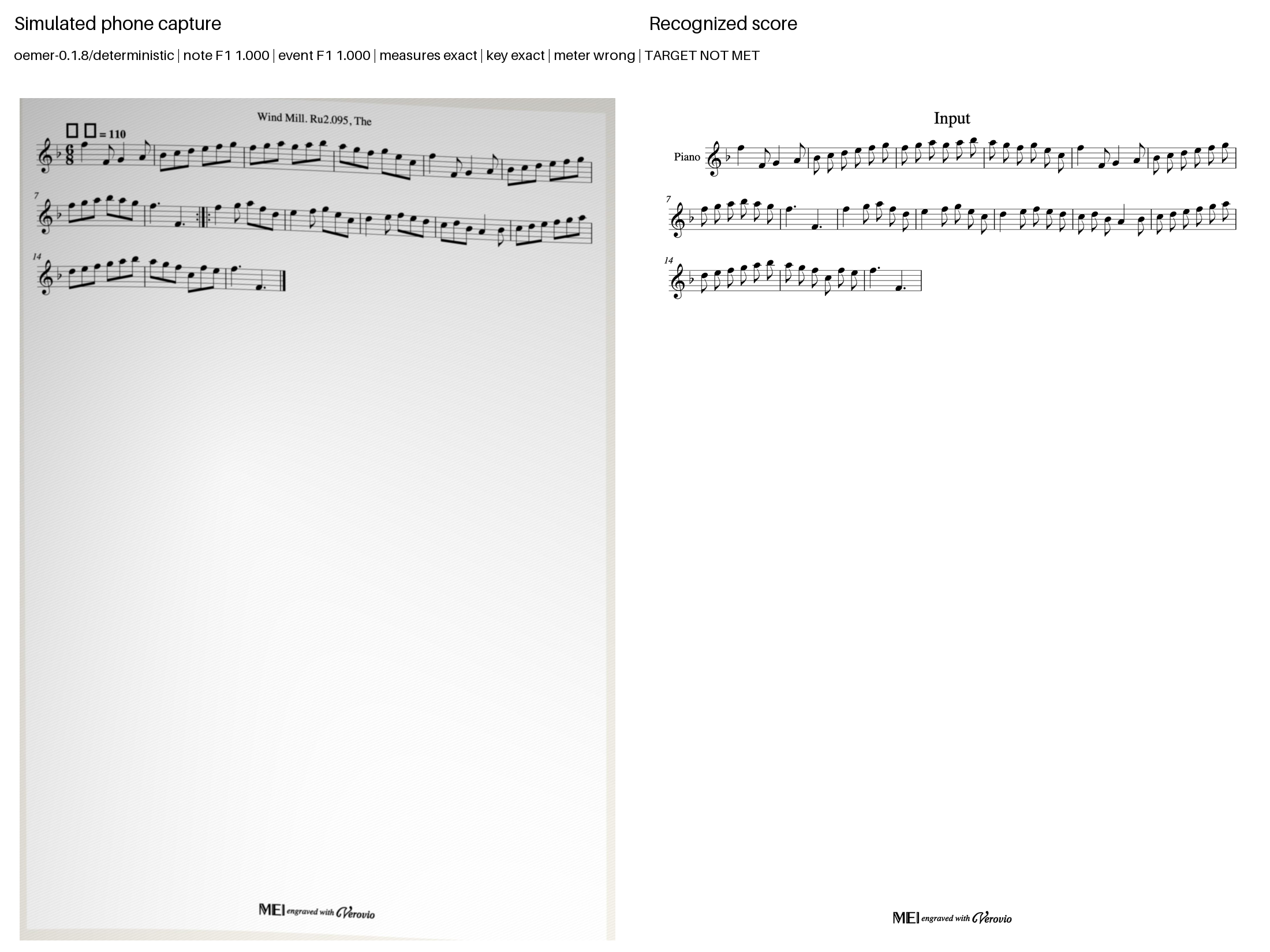
F1 0.966
Highest scoring
One exact-measure mismatch remained.
Benchmark evidence
Three fixed synthetic artifacts show the useful range and the failure range. They are copied from the benchmark worktree only after their SHA-256 hashes match the source receipts.
No sampled configuration earned automatic publication status.
One exact-measure mismatch remained.
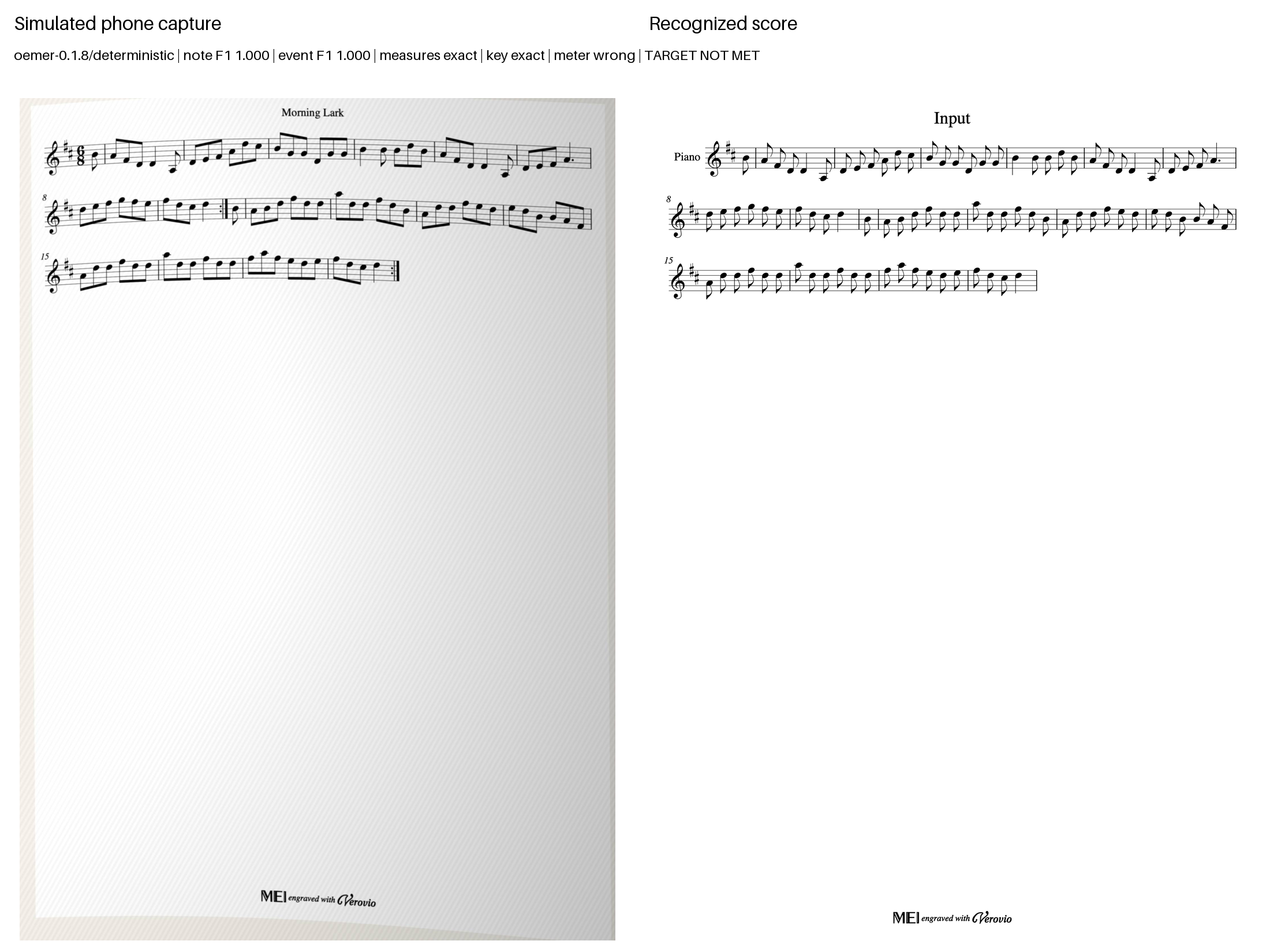
Useful practice territory; not publication confidence.
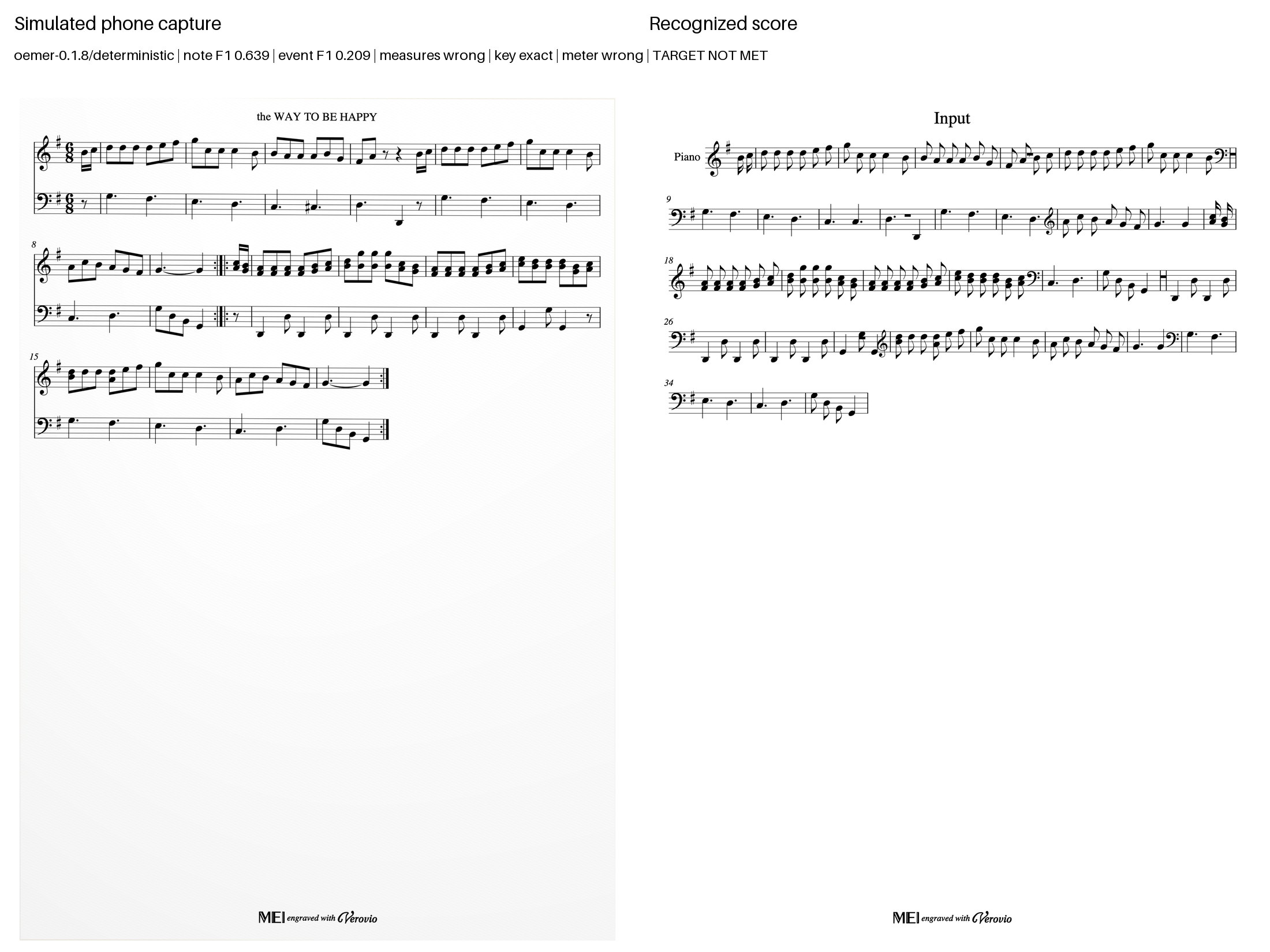
Confidence did not track correctness.
Development averages: oemer mean F1 0.663; Audiveris mean F1 0.530 across the 140-page synthetic corpus. These figures characterize that corpus and setup only. Real owner photographs were not used, and no real-photo accuracy claim follows from them.
Attribution
The source pages are from PDMX, licensed CC BY 4.0. Brightclef modified them into synthetic phone-capture inputs, ran optical music-recognition engines, and rendered the recognized MusicXML back to notation for comparison.
Artifact labels, crops, and benchmark overlays are Brightclef modifications. The committed manifest records source commit, hashes, license, and publication status.
What this does not prove